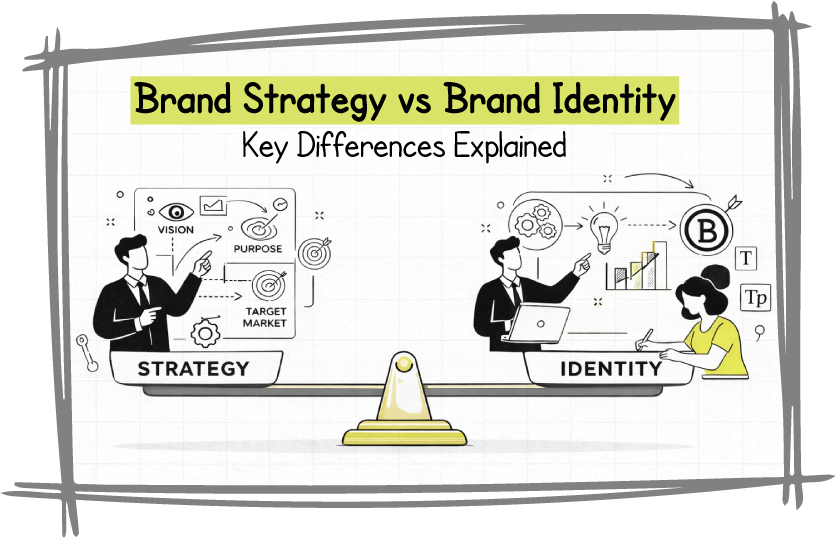
Table of Contents
- What Is Brand Strategy?
- Key Elements of a Brand Strategy
- What Is Brand Identity
- Key Differences: Strategy vs Identity
- How Strategy and Identity Work Together
- Common Mistakes and Pitfalls
- FAQs: Brand Strategy Basics
- Conclusion
Do you also get confused between brand strategy and brand identity? Then, you may not be at fault. Because in the world of branding, brand strategy and brand identity often seem a bit interchangeable. When you step into any growing company, you will hear the same words over and over: brand, strategy, identity, sometimes even in the same sentence. A lot of people often use them interchangeably, and it's in that overlap that confusion quietly takes root.
Although they are closely related and often used interchangeably, these two concepts play very different yet complementary roles in shaping your brand's perception and success. The real problem between brand identity and brand strategy arises during times of change.
A sharper rebrand fails to move revenue, or a solid growth plan doesn't land quite well with customers. On paper, everything seems aligned, but in practice, something feels off. Therefore, we will deep dive into this blog to understand the actual difference between brand strategy and brand identity.
But before moving directly to the difference, it is essential to understand "what is brand strategy" and "what is brand identity" individually.
What Is Brand Strategy?
Brand strategy is a holistic, long-term plan designed to help you achieve your business goals. The plan defines what a brand stands for, why it exists, and how it will reach its target audience. It serves as the foundational blueprint for your entire brand.
A brand strategy usually operates behind the scenes, setting your brand's direction and goals and providing a strategic roadmap for your marketing team. It is more than what your audience sees; it's about the decisions, planning, and actions that effectively position your brand and business.
But here's the reality: without a clear brand strategy, your brand is just sitting there looking appealing.
Some reasons why brand strategy matters for business are that it:
- Differentiates your brand from your competitor brands in the crowded market,
- Helps your brand in building trust and credibility amongst your target audience,
- Acts as a guide for all the communication, ensuring consistency in message and experience across every touchpoint.
- Builds emotional connection with your customers,
- Fosters loyalty and encourages repeat business, transforming customers into loyal brand advocates.
Ultimately, a brand strategy connects your business's core to your customers' needs, helping your brand reach its goals. Once you have prepared a clear, concise brand strategy, crafting your brand identity becomes much easier.
Key Elements of a Brand Strategy
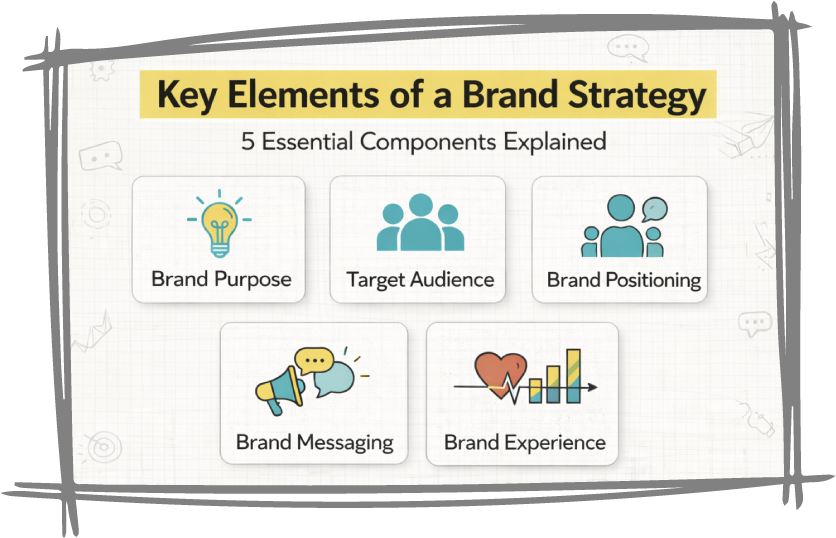
Here's what is included in the brand strategy:
Brand Purpose:
Purpose is the heart of your brand strategy, reflecting the reason why your brand exists, beyond just making a profit. It includes your core values, mission, and vision, which guide your actions and provide meaningful direction for your decision-making.
Target Audience:
These are specific segments of a large group of people who are interested in, want or need your product/ services. The target audience covers demographics, geographics, user needs and other preferences.
Brand Positioning:
This informs you where your brand stands in the market amongst your competitors. It depends on how you want your brand perceived compared to your competitors. It significantly highlights the unique value you offer, creating a point of difference for your audience.
Brand Messaging:
Messaging is the strategic, consistent narrative a brand uses to communicate its purpose, core values, and USPs to its customers across all touchpoints. It truly communicates the essence of your brand. You need to maintain consistent, effective communication for each target audience.
Brand Experience:
It refers to the overall, emotional, and sensory perception your customer forms after interacting with your brand across all touchpoints. The key is to provide a consistent, memorable and positive brand experience to your target audience to build long-term loyalty and emotional connection.
What Is Brand Identity
Brand identity is the emotional, visual, and verbal representation of your business. Imagine your brand as a person: brand identity is how this person chooses to dress, how they do their hair, their style of speaking, and their unique traits. It is said to be the tangible expression of the brand, the way it looks, sounds, and feels to customers. This means it is how your target audience perceives your brand; the design elements and overall image that make you unique.
Here's what is included in brand identity:
- The Visual Element: assets like logo, colour palette, typography, imagery styles and graphic elements.
- The Verbal Element: The tone of the voice in which your brand communicates with its audience, and the brand messaging that includes the core values your brand conveys.
- The Emotional Element: It encompasses your customers' overall brand experience during interactions, the quality of your products or services, and the emotions evoked by your values.
Your brand identity should reflect your brand strategy, which is why brand strategy always comes first.
Key Differences: Strategy vs Identity
| Feature | Brand Strategy | Brand Identity |
|---|---|---|
| Purpose | To define the "how" and "why" behind the business by preparing a long-term plan for values, positioning, and differentiation in the market. | To determine "what" by creating a visual language that translates brand goals into tangible and recognisable elements. |
| Timing | Established first as a foundation because it serves as an essential blueprint for various business decisions. | Developed second after the strategy is finalised to ensure that all the design elements accurately represent the brand's purpose and values. |
| Audience Focus | Specifically focuses on the customer's psychological needs and pain points. | Focuses on the customer's external sensory perception to create an immediate, recognisable first impression. |
| Outcome | Results in the creation of a strategic framework including mission, vision, values, target personas, USPs, and the overall brand experience. | Results in a physical or tangible toolkit of assets containing logo, colour palette, typography, tone of voice, and emotional elements. |
| Impact on Business | Drives market growth and directly influences business revenue through strategic direction. | Builds trust and brand equity through consistent and easily identifiable appearance in the competitive market. |
The actual brand identity vs brand strategy difference is:
How Strategy and Identity Work Together
Even though they play different roles, identity and strategy are often said to be two sides of the same coin. This makes it even more crucial to understand how brand strategy influences identity. A well-defined brand strategy serves as the foundation for a strong brand identity, and a strong brand identity ultimately brings the strategy to life.
Cohesion also helps foster brand consistency, improve brand recognition, and build brand equity over time. Without a strategy, identity is just an appealing picture and without identity, strategy remains an unrealised plan. The balance is where brand identity and brand strategy stop being a debate and start becoming a system.
Common Mistakes and Pitfalls
Here are a few common mistakes and pitfalls:
❌ Treating brand identity as a one-time project:
This is one of the most common mistakes that should be corrected. As brands evolve, systems should evolve too with time.
❌ Overloading strategy with abstractions:
This is another common mistake brands make. Brands should always prepare simple frameworks, as they frequently travel further internally.
❌ Delay identity work, waiting for clarity:
Some brands delay identity work for too long, waiting for perfect clarity. However, in this, momentum matters significantly. Brand strategy can guide iteration without slowing or stopping the progress.
FAQs: Brand Strategy Basics
What is the major difference between brand identity and brand strategy?
Brand strategy defines who it serves, how it competes, and why it exists. On the other hand, brand identity is how a brand looks and sounds.
What should be developed first: brand strategy or brand identity?
Brand strategy should always be developed first. It is crucial to understand your brand's purpose and target audience. After that, you can create a visual identity that clearly communicates that message. Your strategy is the foundation of your identity.
Can a brand succeed with only a strong brand identity?
It may gain attention for a short time, but it is not advisable. If your brand wants long-term growth, it will require a strategy to guide messaging and decisions.
How do strategy and identity work together?
They work together to create an authentic and cohesive brand experience. Your strategy shapes the creative choices in your identity, building trust and recognition with your customers.
Do branding services in Ahmedabad include both brand identity and brand strategy services?
Absolutely, trusted branding services in Ahmedabad always include both brand identity and brand strategy services to create a magnetic effect for your brand.
Conclusion
While brand strategy and brand identity serve distinct purposes, combining them significantly helps build a successful brand. If your brand lacks either of the two, you should address this gap to grow your business.
By partnering with Brand Board Media, a reliable creative branding agency in India, you can address this gap effectively and ensure the long-term success of your business.