Table of Content
- What Is Brand Strategy?
- Why Is Brand Strategy Important for Businesses?
- Key Elements of a Brand Strategy
- How to Create a Brand Strategy (Step-by-Step)
- FAQs: Brand Strategy Basics
- Conclusion
Have you ever wondered how some brands feel instantly magnetic, like you can instantly trust and connect with them? The answer often lies in their brand strategy.
Today, every brand wants to connect, stand for something, and be felt, not just noticed. However, connection doesn't happen automatically or by accident; it takes clarity, intention and consistency. That's where brand strategy comes in.
It's that secret ingredient that creates a brand beyond just logos and taglines. This is especially important in helping you distinguish your brand from competitors. So, whether you are a brand-new company or an established one evolving, your brand strategy will serve as a blueprint that guides every brand decision you make.
Hence, if you want to know all about brand strategy, then you have come to the right place. This blog serves as a beginner's guide for your business, helping you understand exactly what brand strategy is.
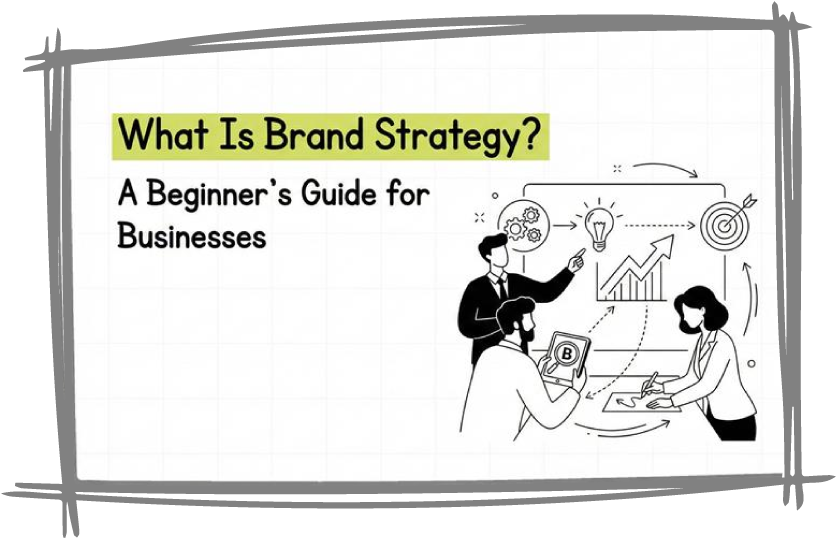
What Is Brand Strategy?
At its core, a brand strategy is a long-term, intentional plan that outlines how you would like people to perceive your brand. The plan is simply for how your brand defines who it is, what it stands for, and how it connects with people. It mainly involves your intention, your tone, your appearance, and what you convey.
However, it is essential to understand that it is not merely a logo, tagline, or marketing campaign. A strong brand strategy is the blueprint that significantly shapes your:
- Purpose and Vision (why you exist)
- Positioning (where you stand in the market)
- Personality and Voice (how you express yourself)
- Messaging and Story (what you say and how you say it)
- Design and Experiences (how people interact with you)
Imagine it this way: if your brand is a house, strategy is the foundation. Everything else, including designs, campaigns and experiences, gets built on top of it.
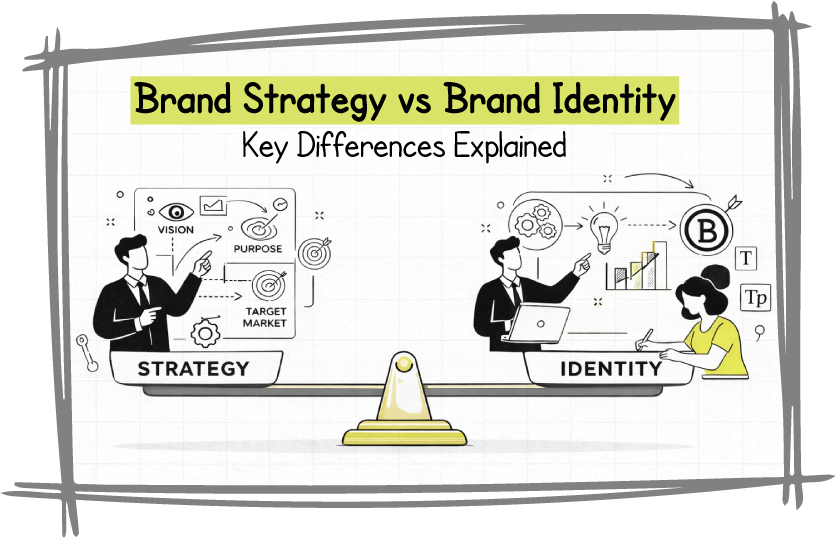
Still, many people are confused about brand strategy vs branding and marketing. Here's a difference simplified for you:
Brand Strategy: The intention and objective of your brand
Branding: The creation and expression of that identity
Marketing: The strategic execution to reach and engage the target audience with the brand
Why Is Brand Strategy Important for Businesses?
The importance of brand strategy lies in its ability to develop a connection and improve positioning within a highly competitive market. If you don't have a clear strategy, your brand risks being inconsistent, forgettable, or even irrelevant.
Here's why brand strategy is important:
- Trust: Customers are more likely to return and recommend your brand when they develop trust in it.
- Clarity: Everyone in your company understands who you are and how to show up.
- Connection: Your target audience feels something real and meaningful when they come across your brand.
- Alignment: Your team moves in the same direction, guided by the brand strategy.
- Consistency: Every touchpoint, whether it's online or offline, feels like your brand.
Key Elements of a Brand Strategy
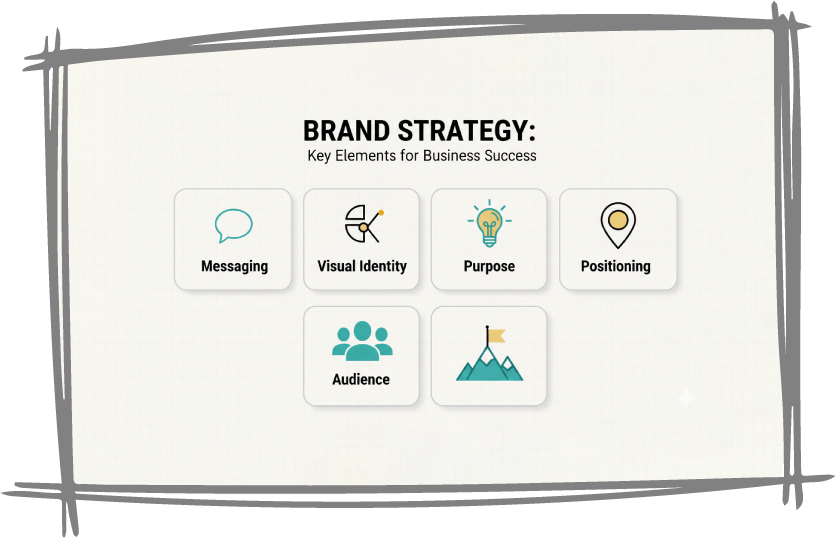
Creating a brand strategy for businesses requires balancing a combination of core elements. Here are some key elements of a brand strategy:
Brand Purpose and Vision: Understanding Why Your Brand Exists and Its FutureBrand purpose is the heart of your brand, describing why your business exists beyond simply making money. It's a significant driving force and the difference the brand wants to create in the world and in its customers' lives. On the other hand, the vision describes the future you aim for your brand, like the future you imagine for the people you serve.
Target Audience: Building a Brand Strategy Around Real PeopleThe target audience is the clearly defined segments of the population that the brand seeks to serve. This involves thoroughly understanding their needs, challenges, behaviours and aspirations. In today's world, with the help of digital technologies and AI, it is easier than ever to understand your customer. This helps in making your brand more relevant and relatable.
Brand Positioning: How You Can Stand Out in the MarketBrand positioning creates the difference between your brand and your competitors' brands in the market. It showcases where you stand in the market and how you differentiate from your competitors. Distinct positioning enables customers to see your brand's value clearly.
Brand Messaging: Creating a Voice That ConnectsBrand messaging is how your brand speaks to customers, including your tone, tagline, and central message. Good messaging is always simple, clear, and, most importantly, consistent at every touchpoint. It significantly helps your customers feel connected to your brand.
Visual Identity: Bringing Your Brand Strategy to LifeThe visual elements encompassing logo, fonts, and colours represent your brand. It becomes much easier to identify your brand when it has a powerful visual identity. When they align with your brand personality, customers are more likely to remember you and trust you more quickly.
Brand Experience: Making Every Touchpoint ConsistentBrand experience refers to how customers interact with your brand across various touchpoints. It is the sum of all customer interactions with a brand, from initial awareness to purchase and post-purchase engagement. This includes both online and offline experiences such as websites, social media, customer service, ads, and packaging. Understanding how founders create Gen Z branding that resonates with mission-driven and younger consumers is essential for building meaningful connections and loyalty. Providing a consistent experience across all touchpoints is key to achieving a strong and positive brand presence.
How to Create a Brand Strategy (Step-by-Step)
If you are wondering, "How does brand strategy help business growth?", then this step-by-step guide will help you create a brand strategy that can help you grow your brand:
1) Define business goals
The first step of creating a brand strategy is to define your business goals clearly. Define your purpose, mission, vision, and values, and understand the why behind your work. These serve as a solid foundation for your brand, informing everything about your business, and are the least likely to change over time.
2) Understand your audience
Next, it is essential to understand your audience's needs, behaviours, and preferences. You should particularly know how your customers interact with your brand. Build a detailed customer persona, and map customer journeys across touchpoints. The better you understand your target audience, the more effective your brand's connection with them will be.
3) Analyse competitors
Without a well-defined brand strategy, your brand will not be able to set a unique and identifiable purpose. Analyse your competitors by thoroughly studying current market scenarios and your standing within them. Studying your competitors can help you understand their shortcomings, position your brand differently, and get ahead of the competition.
4) Create positioning and messaging
The heart of the brand strategy lies in brand positioning and messaging. How your brand is positioned in the market ultimately determines how consumers perceive you and your ability to meet their needs. On the other hand, your messaging combines all the elements and becomes part of your brand strategy when everything is locked in place.
A brand message conveyed as a compelling story will make your brand meaningful and memorable. However, it is essential to ensure the messaging framework remains consistent across touchpoints, as consistency builds trust.
5) Align strategy with marketing channels
A strong branding strategy requires everyone to be on the same page. This involves keeping your team with the brand's overall vision and planning your marketing efforts for the long term, rather than keeping them only campaign-specific. This ensures your brand maintains consistency across every channel, creating a clean, cohesive presence that helps build trust.
FAQs: Brand Strategy Basics
What are the 4 C's of brand strategy?
The 4 C’s of brand strategy are Company, Customers, Competitors, and Category. It focuses on your mission, target audience, market competition, and clear positioning in your industry.
What are the benefits of creating a brand strategy?
Creating a brand strategy gives clear direction to your business. It defines your mission, target audience, and message. It builds trust, improves your brand image, and helps you attract the right customers for sustainable growth.
What is a corporate branding strategy?
A corporate branding strategy is a plan to build one strong brand image for the whole company. It focuses on company values, mission, and reputation. All products and services follow the same identity so customers trust and recognise the company easily.
Brand strategy vs branding: what's the difference?
Strategy is the thinking and planning behind your brand, whereas branding is the visual and verbal execution of that strategy. In simple terms, brand strategy is the blueprint, and branding is the finished house.
Does the creative branding service include brand strategy?
Absolutely. The brand strategy is often the first step in the creative branding service in Ahmedabad, helping you create a magnetic brand identity.
Conclusion
If you are ready to get serious about growing your brand, brand strategy is the best place to start. The world's most successful brands regularly invest millions of dollars in brand strategy, but it doesn't take a fortune to leverage the tools within it.
All it takes is your time, a little patience, and a reliable branding expert aligned with your brand's goals. Partnering with Brand Board Media, a leading branding and advertising agency in Ahmedabad, can literally create a magnetic effect for your brand. Contact us today to elevate your brand strategy.
FAQs
Customers become loyal to a brand due to consistent quality, positive experiences, emotional connections, trust, and perceived value.
Brand loyalty is created through emotional connections, consistent product quality, positive customer experiences, trust, and perceived value. When customers feel valued and see personal relevance in a brand, they are likely to remain loyal, even in the face of competition.
Companies build brand loyalty by consistently delivering quality products or services, creating emotional connections through personalized experiences, and fostering trust. Companies can cultivate lasting loyalty by aligning with customers' values and exceeding expectations.
Brand loyalty can be measured through repeat purchase behaviour, customer retention rates, Net Promoter Score (NPS), and customer satisfaction surveys.